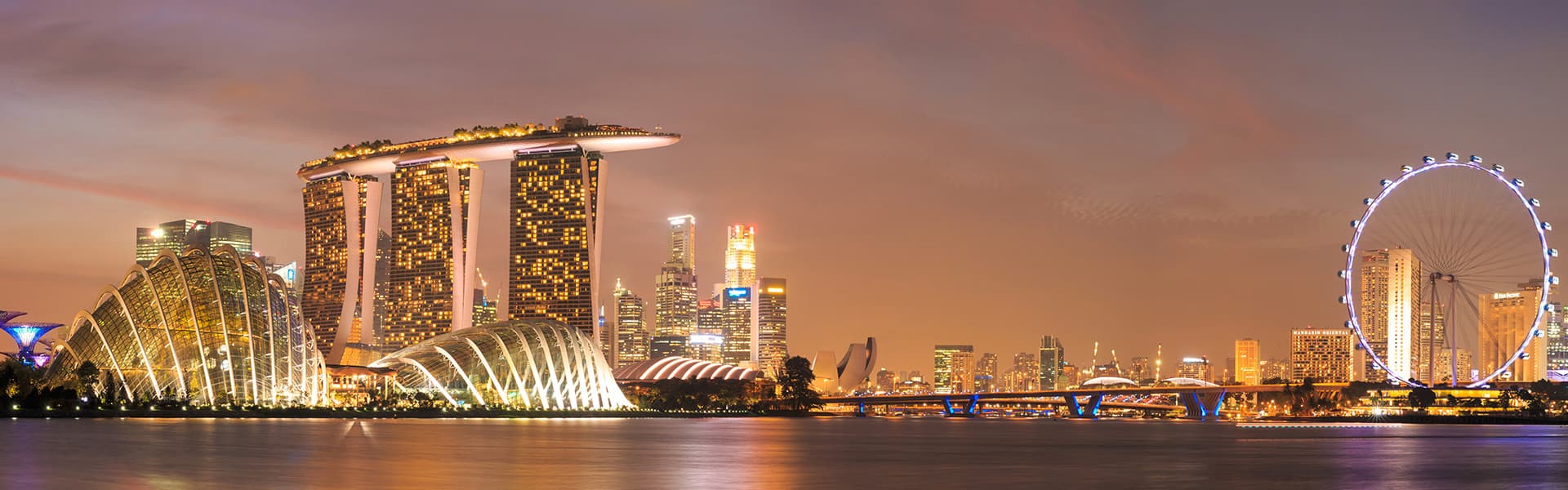



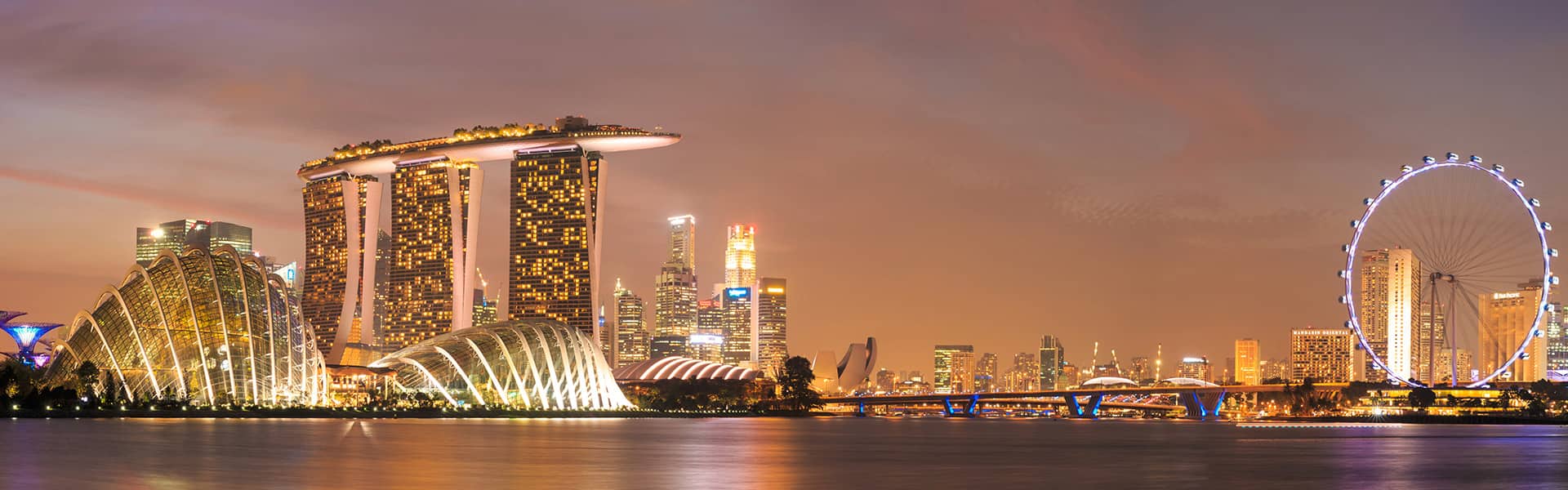
Singapore compresses a first-rate case study in trade, finance and state-led development into an island a school group can cross in under an hour. For a Dubai-based school it is a natural comparison point: another small, resource-light city-state that built prosperity on ports, aviation, logistics and sound regulation, reached in roughly seven hours from DXB.
The city itself functions as the teaching resource, from the Singapore City Gallery at the Urban Redevelopment Authority, where a vast scale model of the island explains six decades of land-use planning, to the Monetary Authority of Singapore's MAS Gallery on the monetary and financial system. Groups can look down on the Raffles Place and Shenton Way financial district, visit the Singapore Maritime Gallery overlooking the container terminals, and see enterprise on a different scale at Block71 in one-north, the start-up cluster beside Biopolis. The National Museum of Singapore and the Asian Civilisations Museum at Empress Place supply the trade and migration history behind it all, while the NEWater Visitor Centre shows how a state with no natural water supply engineered its way around the problem.
Curriculum links
Business & Economics
Students can move in a single day from the MAS Gallery and the Singapore Exchange in Raffles Place to the port views at the Singapore Maritime Gallery and the start-up floors of Block71 in one-north, tracing how monetary policy, trade infrastructure and enterprise policy connect in one economy.
When to travel
Singapore sits just north of the equator, so groups should expect daytime temperatures around the high twenties to low thirties Celsius with high humidity in every month of the year. Rain arrives as short, heavy afternoon downpours rather than all-day drizzle, and the extensive network of covered walkways, underground malls and air-conditioned MRT stations means an itinerary rarely has to be abandoned.
Spring
March to MayHot and humid with strong sun; comfortable for trips if outdoor time is kept to mornings.
Summer
June to AugustSouthwest monsoon, warm with squalls; fine for trips, occasional regional haze possible.
Autumn
September to NovemberIncreasingly wet towards November; indoor institutions and covered walkways carry the day.
Winter
December to FebruaryNortheast monsoon and the wettest stretch, but still warm and entirely workable.