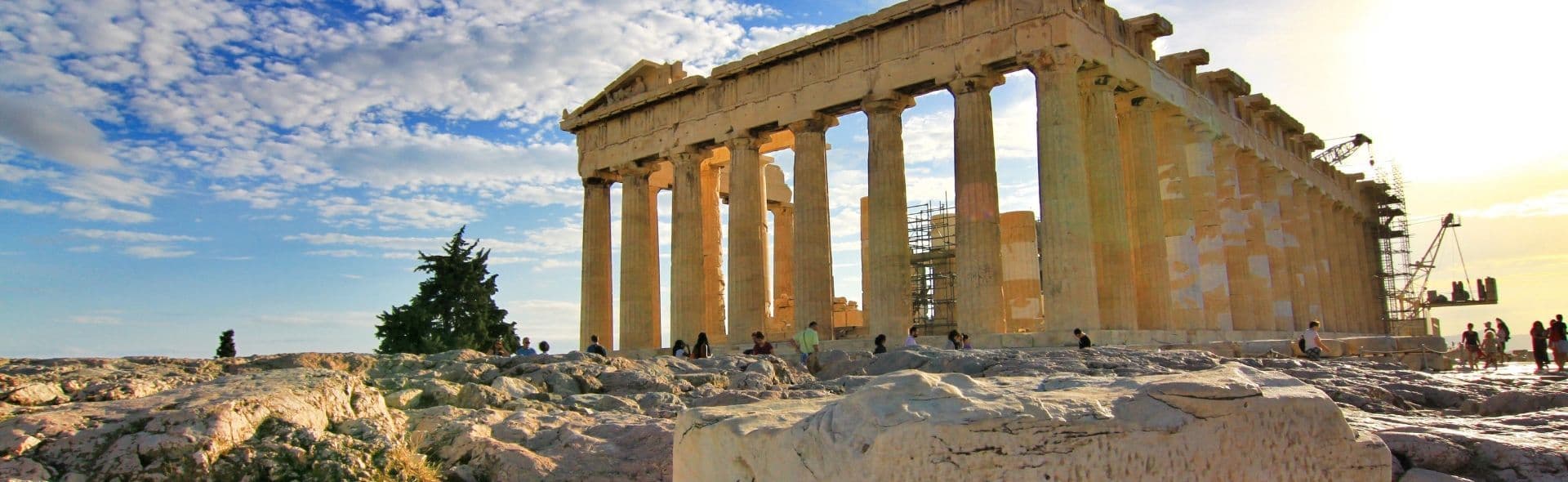



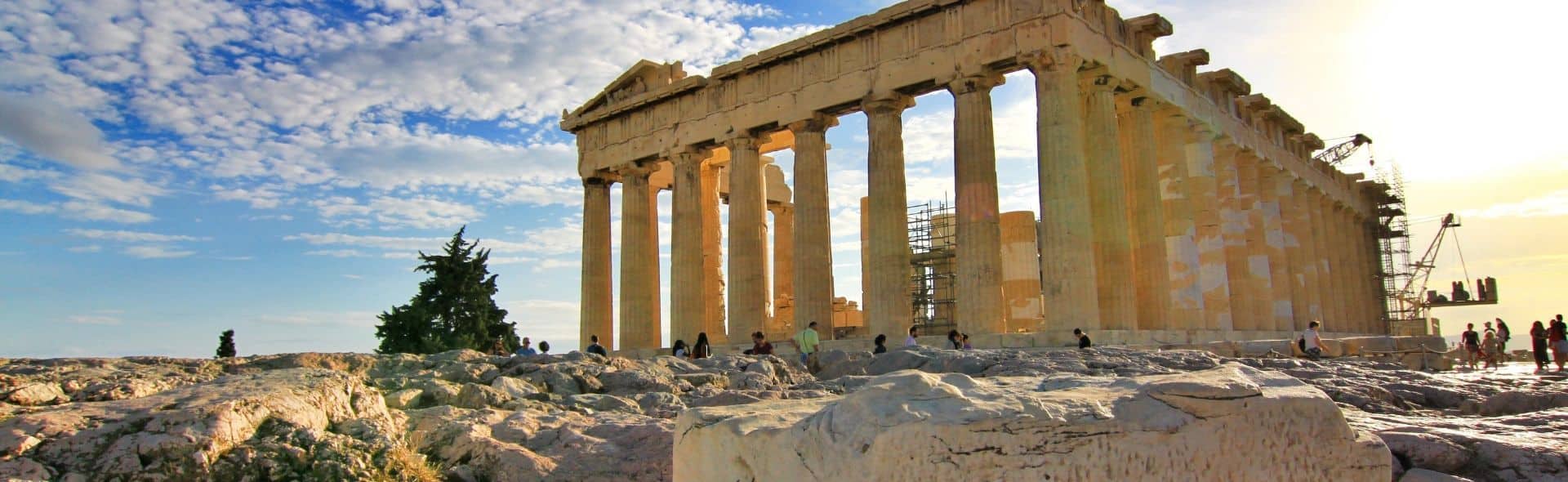
Athens allows students to stand on the ground where democracy, drama and Western philosophy were first argued into existence, with the Acropolis visible from much of the city as a constant point of reference. For schools departing Dubai, it is a straightforward direct flight of roughly four and a half hours, making a compact and academically dense itinerary possible without long transfers.
The Acropolis Museum, built directly over excavated ancient housing and with its top-floor Parthenon Gallery aligned to the temple itself, is the single most effective teaching space in the city, and it pairs naturally with a guided ascent of the Acropolis to see the Parthenon, Erechtheion and Temple of Athena Nike. The National Archaeological Museum in Exarcheia holds the Mask of Agamemnon, the Antikythera Mechanism and the Artemision Bronze, giving groups a sweep from Mycenaean to Roman Greece in one visit. Below the rock, the Ancient Agora with the Stoa of Attalos and the Temple of Hephaestus, the Roman Agora and Tower of the Winds, the Kerameikos cemetery and the Panathenaic Stadium fill out a walkable teaching circuit, with the Benaki Museum and Byzantine and Christian Museum available for later periods.
Curriculum links
History
Students can trace the Athenian democracy on the Pnyx hill where the assembly met, examine ostraka and jury allotment machines in the Stoa of Attalos museum, and follow the city through Roman, Byzantine and Ottoman layers at Hadrian's Library, the Little Metropolis church and the Plaka's Ottoman-era streets.
When to travel
Athens has a hot-summer Mediterranean climate, with dry, intensely sunny months from June to September and mild, changeable winters when most of the year's rain falls. Shade is scarce on the Acropolis and at Sounion, so hats, water and early starts matter for much of the visiting year.
Spring
March to MayWarm, clear and green; the strongest window for site visits and long walking days.
Summer
June to AugustVery hot and crowded; sites need dawn starts and strict hydration planning.
Autumn
September to NovemberHeat eases through October; comfortable, quieter and excellent for archaeology.
Winter
December to FebruaryMild but wet and grey at times; museums shine, marble underfoot can be slippery.