


Mongolia offers school groups one of the last great open landscapes on earth, where nomadic herding families still move with the seasons across steppe, desert and mountain. It is a destination that rewards curiosity, resilience and a willingness to live simply for a few days, and students return with a genuinely altered sense of scale and self-reliance.
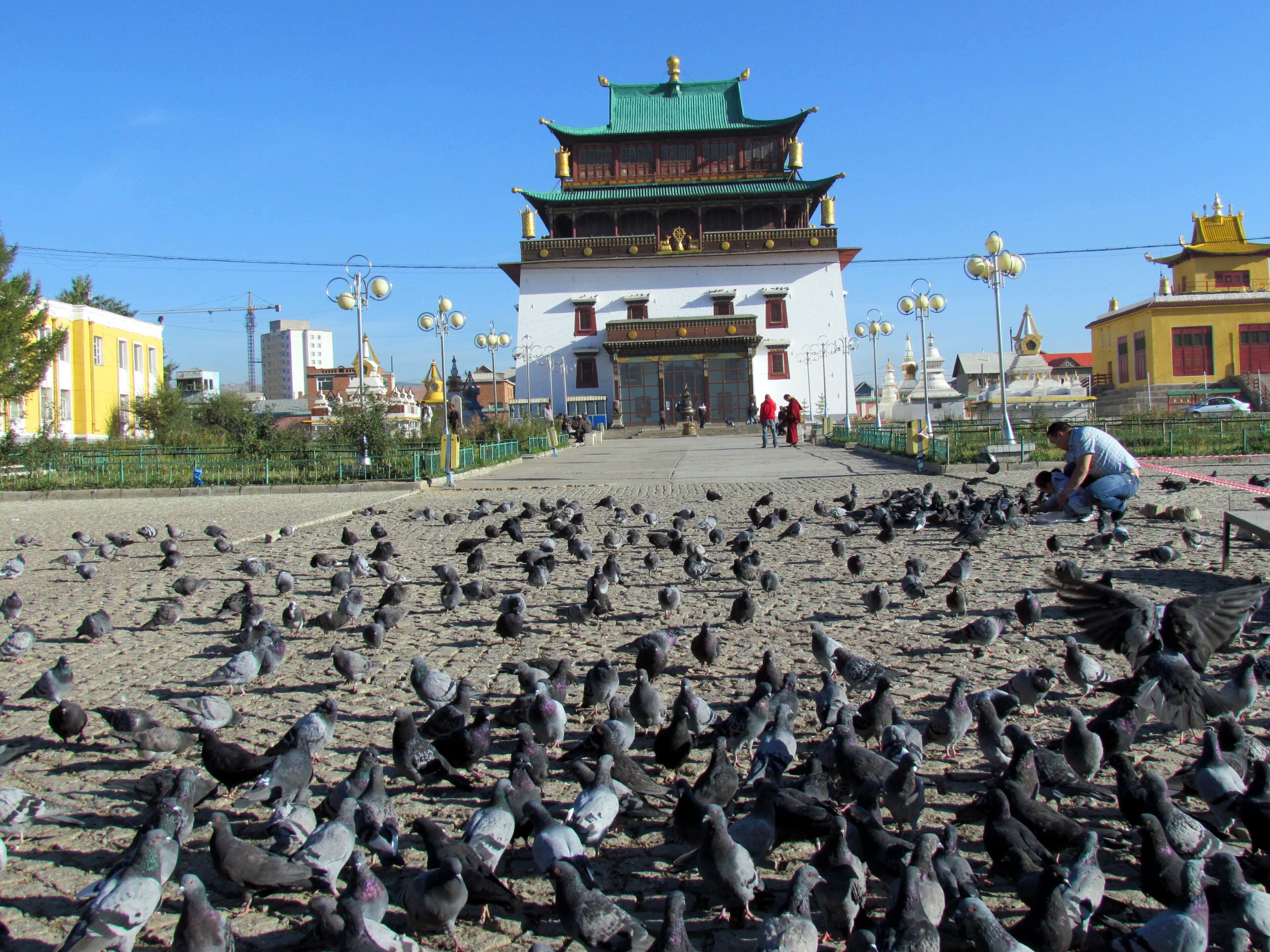
Few places allow students to observe pastoral nomadism as a living system rather than a textbook diagram: staying in a ger camp in the Orkhon Valley or Terelj National Park, they see herd management, felt-making and seasonal migration first hand. The Gobi's Bayanzag cliffs, where Roy Chapman Andrews's expedition found the first recognised dinosaur eggs in 1923, connect palaeontology to a real excavation landscape. In Ulaanbaatar, the National Museum of Mongolia and Gandantegchinlen Monastery set out the arc from the Mongol Empire through the Soviet period to a young democracy.
When to travel
Mongolia has a severe continental climate: dry, sunny and marked by very wide swings between day and night temperatures, so a warm afternoon on the steppe can be followed by a near-freezing evening. Groups should expect strong sun at altitude, low humidity and wind, and pack layers rather than a single heavy coat.
Spring
March to MayCold, windy and prone to dust storms; generally not recommended for school groups.
Summer
June to AugustWarm days, green steppe and the Naadam Festival in July — the prime school-trip window.
Autumn
September to NovemberClear skies and golden steppe in September; sharply colder by late October.
Winter
December to FebruaryExtreme cold, often below -25C; unsuitable for standard school itineraries.